Feature
 Optical Crystal
 Acrylic
 Material
 Appearance
 Weight
 Feel
 Personalization
 Color Graphics
 Impact Resistance
 Shipping
 Typical Cost
 Best For


Large Award Quantities
Lower unit costs and lighter shipping weight make acrylic practical for large recognition programs.
Crystal Awards · Buying Guides
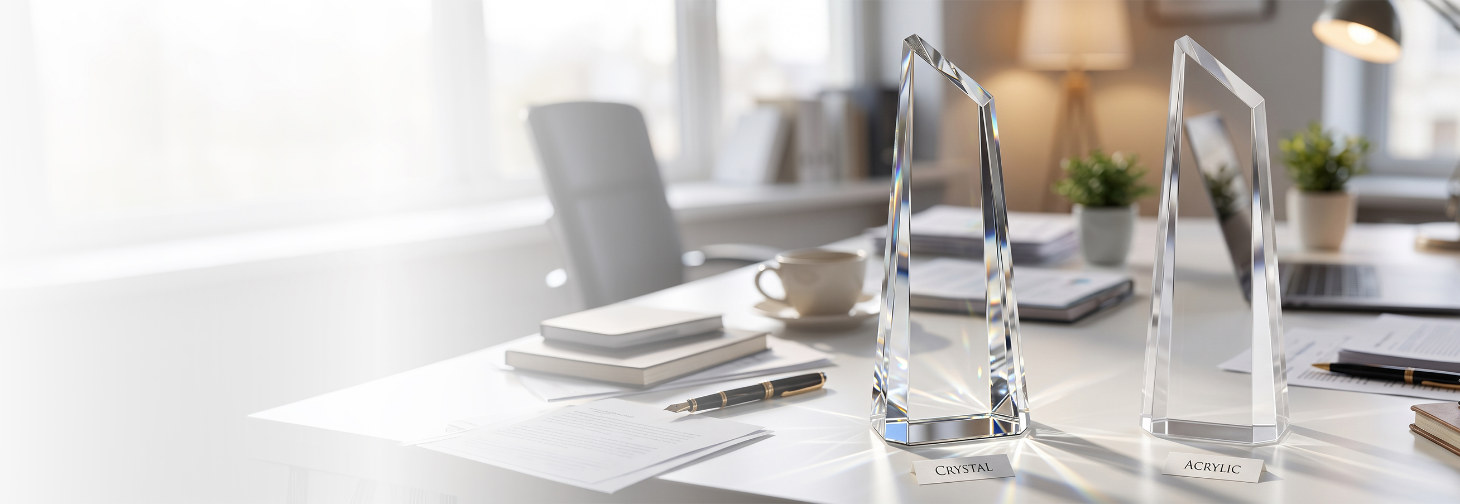
Choosing between a crystal award and an acrylic award often comes down to four things: appearance, weight, budget, and the significance of the recognition.
Both materials can create attractive personalized awards, but they feel very different in person.
Crystal awards are generally the better choice when presentation, substance, and a lasting sense of significance matter most. Acrylic awards are lighter, more impact-resistant, and typically less expensive, making them practical for larger recognition programs and budget-conscious events.
Neither material is right for every situation. This guide explains the differences so you can choose an award that fits the recipient, occasion, and budget.
| Feature | Optical Crystal | Acrylic |
|---|---|---|
| Material | Lead-free optical crystal | Transparent thermoplastic (PMMA) |
| Appearance | Brilliant, highly transparent, polished | Clear, glass-like appearance |
| Weight | Heavy and substantial | Lightweight |
| Feel | Formal and substantial | Modern and practical |
| Personalization | Well suited to deep-etched engraving | Laser engraving and printing options |
| Color Graphics | Selected etched areas can be color filled | Full-color printing is possible |
| Impact Resistance | Can chip or break if dropped | Generally more impact-resistant |
| Shipping | Heavier | Lighter |
| Typical Cost | Higher | Typically lower |
| Best For | Retirement, leadership, major milestones, executive recognition | Large recognition programs, frequent awards, budget-conscious events |
Optical crystal is a high-quality, highly transparent glass material engineered for clarity.
Unlike traditional lead crystal, Crystal Central's optical crystal is lead-free.
High-quality optical crystal is valued for its clean, colorless appearance, polished surfaces, and ability to interact beautifully with light. These characteristics are particularly noticeable in thick awards with polished edges and angled facets.
Crystal Central awards are made from 100% optical crystal rather than acrylic or ordinary award glass.
Because many crystal awards are cut from thick, solid pieces, they can also feel surprisingly substantial when picked up. That physical weight is one reason crystal is frequently chosen for significant recognition occasions.
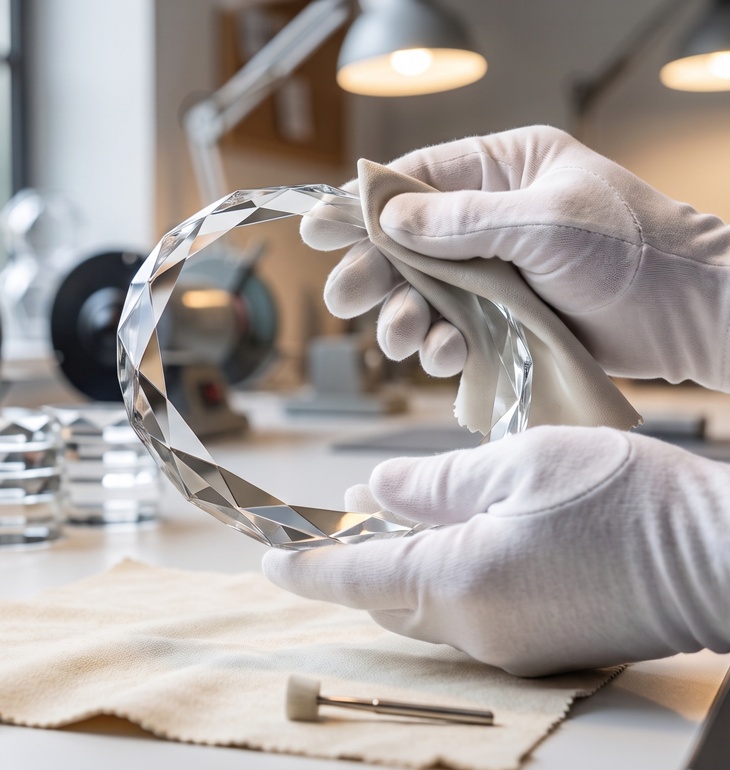
Acrylic is a transparent thermoplastic, commonly known as PMMA and sometimes sold under names such as Plexiglas or Lucite.
It can provide a clean, modern, glass-like appearance while weighing substantially less than a similarly sized solid crystal award.
Acrylic is also versatile. It can be cut into many shapes and can accommodate decoration methods including laser engraving and full-color printing.
Because the material is relatively lightweight, impact-resistant and economical, acrylic is particularly practical when an organization needs:
So choosing acrylic does not necessarily mean choosing a "bad" award. It means prioritizing a different combination of characteristics.
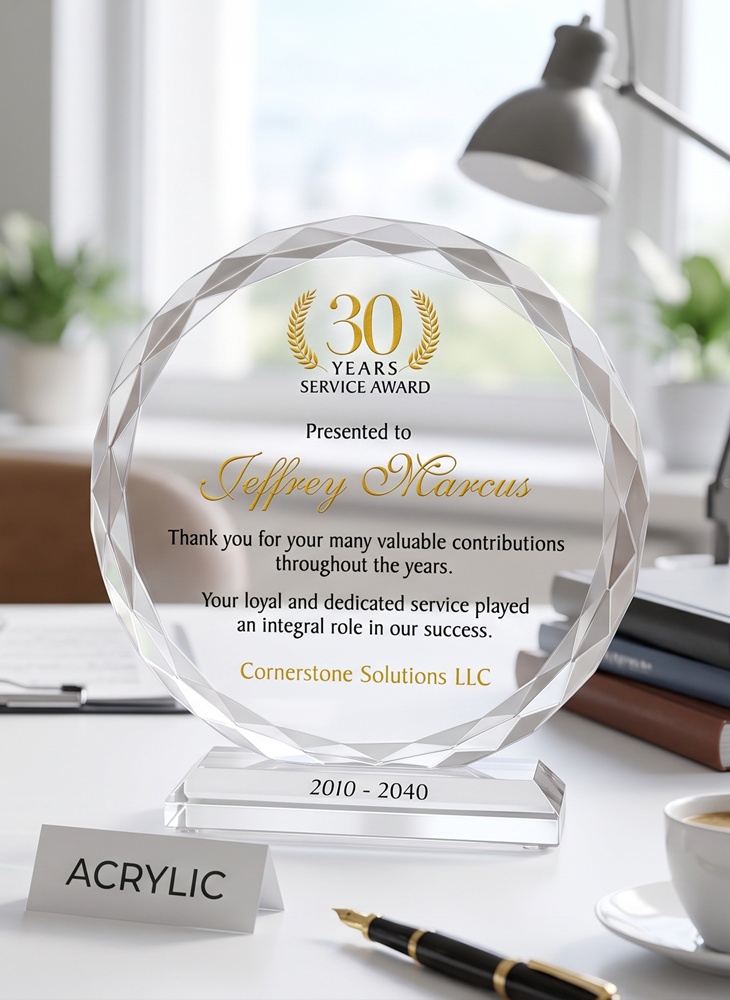
The first difference most people notice is visual.
Acrylic can be very clear and attractive, especially when polished properly. It works particularly well for contemporary award designs.
Optical crystal, however, is designed for exceptional transparency and optical clarity. Thick polished surfaces and facets can capture and refract light, creating the brilliance commonly associated with premium crystal awards.
This becomes especially noticeable when an award is displayed under presentation lighting, near a window, or against a darker background.
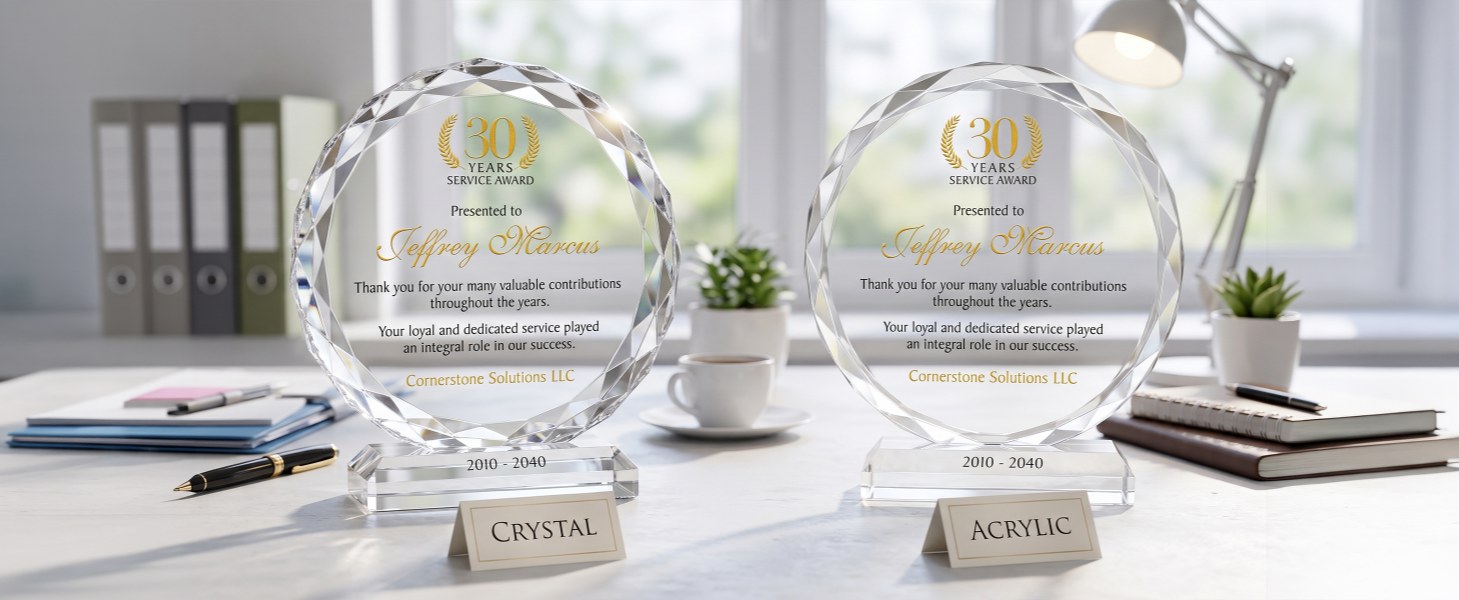
Weight is one of the easiest ways to notice the difference between a substantial crystal award and an acrylic award.
Acrylic is lightweight.
Crystal awards are commonly made from much thicker, more substantial pieces of material, so finished awards can weigh several pounds even at moderate sizes.
For example, some Crystal Central award styles weigh approximately 3–9 pounds in the 7–10 inch size range, depending on the shape and dimensions. Exact weight varies considerably by design.
| Award Style | S-5" | M-6.5" | L-8" | XL-10" |
|---|---|---|---|---|
| Circle Award | 1.9 lb | 3.2 lb | 5.2 lb | 6.8 lb |
| Octagon Award | 2.1 lb | 3.6 lb | 5.4 lb | 8.2 lb |
| Wedge Awards | 2.3 lb | 3.7 lb | 5.7 lb | 8.8 lb |
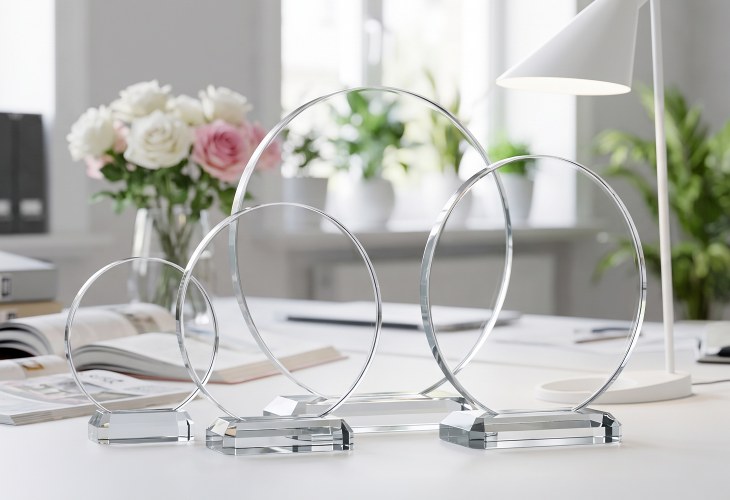
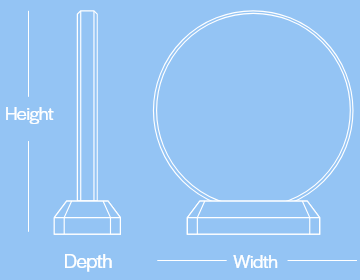
| Size | Height | Width | Depth | Weight |
|---|---|---|---|---|
| Small | 5" | 4.5" | 1.5" | 1.9 lbs |
| Medium | 6.5" | 6" | 2" | 3.2 lbs |
| Large | 8" | 7.5" | 2.5" | 5.2 lbs |
| X-Large | 10" | 9.5" | 2.75" | 6.8 lbs |
The method used to personalize an award matters almost as much as the material itself.
Crystal Central uses deep-etch sandblasting to engrave wording, names, logos and artwork into the surface of its optical crystal awards.
Instead of simply printing the design onto the surface, the sandblasting process physically etches the design into the crystal.
The etched areas naturally take on a frosted appearance that contrasts with the surrounding clear crystal.

Acrylic awards are commonly personalized using methods such as laser engraving or printing. Acrylic also has an advantage when full-color graphics or unusual custom-cut shapes are important.
The better method therefore depends on the desired appearance.
For example, color fill may be used to emphasize:
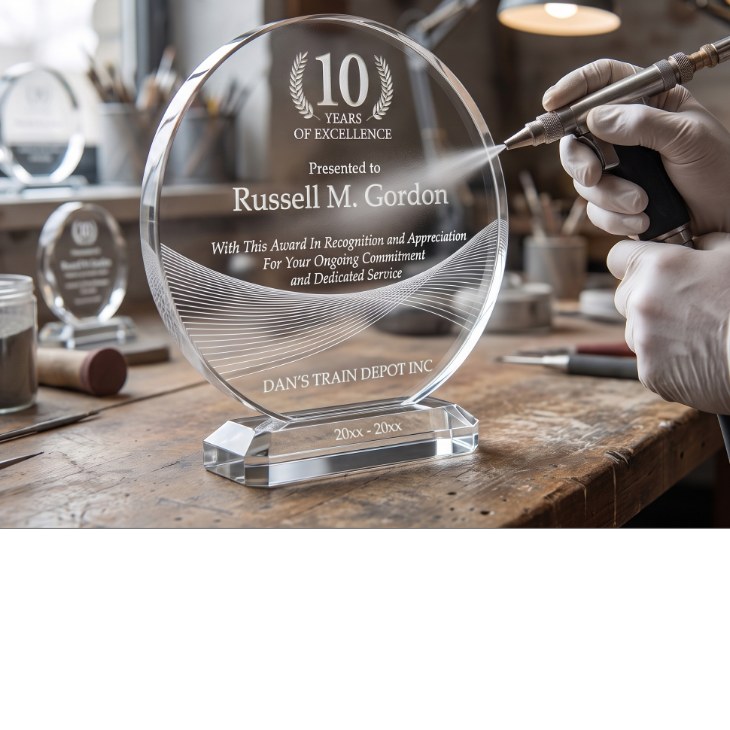
Traditional sandblasting creates deep,
dimensional engravings in pure optical crystal
- far beyond surface-level laser work.
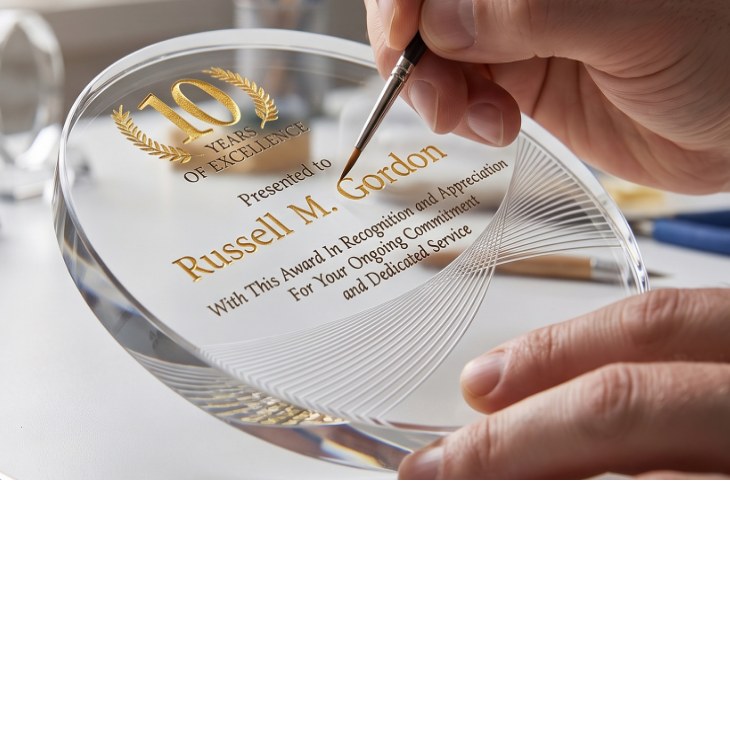
Hand-painted by skilled artisans for
vibrant color, crisp detail,
and a brilliant, eye-catching finish.
Natural deep etching creates an understated, classic appearance.
Color fill creates stronger contrast and can make selected elements more prominent.
Because the color is applied to etched areas, not every extremely fine detail or complex multicolor graphic is equally suitable for color fill. The artwork should be evaluated as part of the proofing process.
Acrylic generally has the advantage in impact resistance.
If an acrylic award is accidentally knocked over or dropped, it is less likely to chip or shatter than crystal.
Crystal should be handled more carefully. A substantial crystal award can chip or break if dropped onto a hard surface.
On the other hand, a properly displayed crystal award can remain an attractive keepsake for decades.
This creates a simple tradeoff:
Acrylic has practical advantages.
Crystal often has presentation advantages.
Several factors contribute to the difference:
Acrylic is usually the more economical choice when an organization needs a large number of awards.
But price should be considered in relation to the purpose of the award.
For example, the appropriate choice for 200 quarterly recognition awards may be very different from the appropriate choice for one employee retiring after 35 years.
The question is therefore not simply: “Which material costs less?”
A better question is: “How important is this particular recognition, and what type of presentation do we want the recipient to experience?”
Both materials can work well for employee recognition.
For example, an acrylic award may work very well for a monthly recognition program, while crystal may be more appropriate for an annual Employee of the Year award.
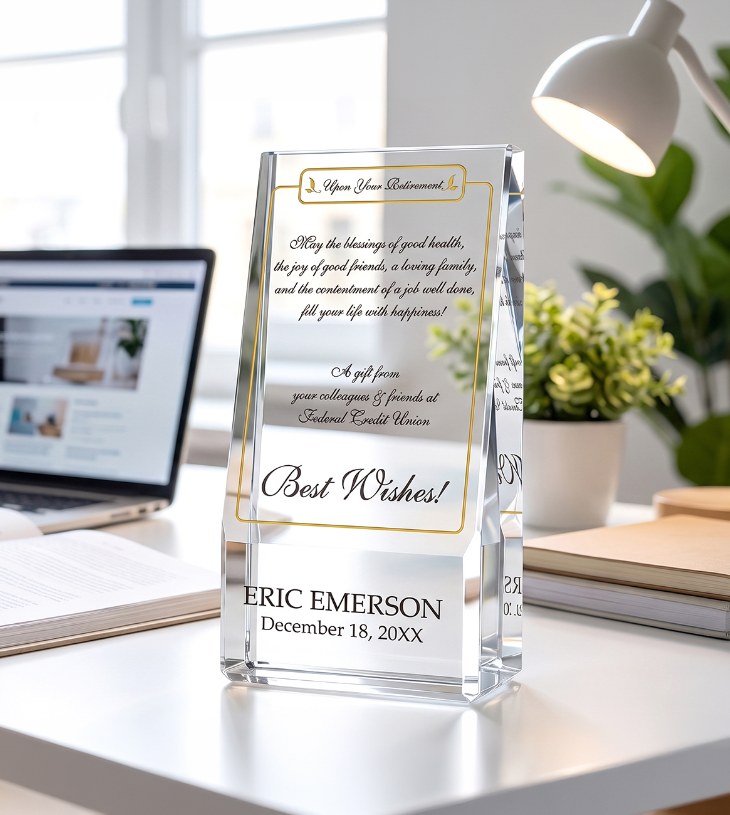
A retirement award is normally presented only once, and it often represents decades of service.
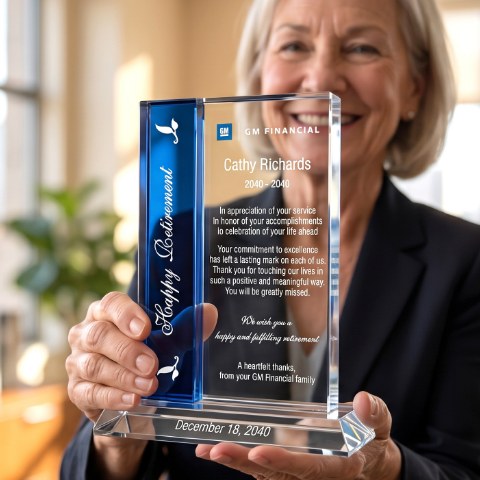
The award may include
A substantial crystal award provides enough visual presence to make the presentation feel ceremonial while serving as a long-term keepsake afterward.
For someone retiring after 20, 30 or 40 years, many buyers therefore place more emphasis on significance and presentation than on minimizing the cost of the award.

Acrylic can still be appropriate when budget, shipping, or a contemporary design style is the priority.
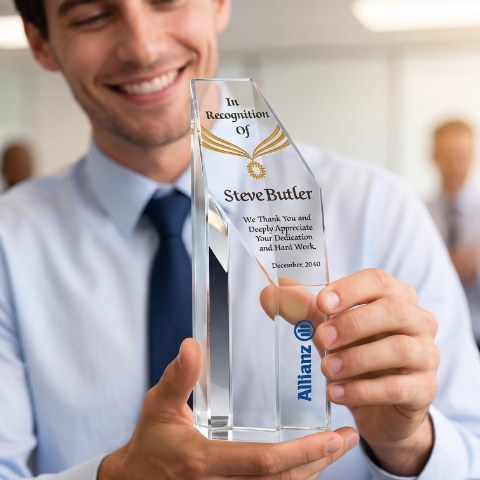
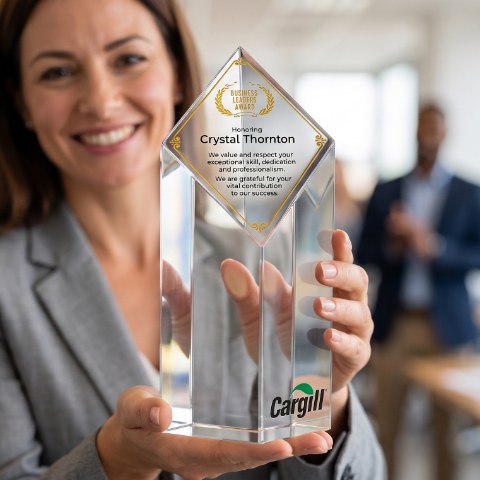
For executive recognition, leadership awards, President's Awards and lifetime achievement honors, crystal is often selected because of its visual presence and substantial feel.
Acrylic may be preferable when the design calls for a modern custom shape, prominent full-color branding, or lighter weight.
The material should support the character of the recognition rather than simply following a rule that one material is always better.
The significance of a service milestone usually increases with time.
One approach is to match the award presentation to the importance of the milestone.
For example:
| Service Milestone | Possible Approach |
|---|---|
| 5 Years | Practical recognition piece |
| 10 Years | More substantial award |
| 15–20 Years | Formal recognition |
| 25+ Years | Premium commemorative award |
| 30–40+ Years | Major milestone / retirement-level presentation |
This does not mean every organization needs to follow this progression.
Company culture, budget, recognition frequency and employee expectations all matter.
But for major career milestones, the additional physical presence of crystal can help distinguish the occasion from everyday recognition.
Size should correspond to both the occasion and the amount of visual presence you want.
As a general starting point:
| Approximate Size | Typical Use |
|---|---|
| 5–6 inches | Appreciation, smaller recognition |
| 6.5–8 inches | Employee recognition, service awards |
| 8–10 inches | Retirement, leadership, major milestones |
| 10+ inches | Executive recognition, lifetime achievement, major honors |
These are guidelines rather than rules.
An 8-inch thick, wide crystal award can have considerably more physical presence than a narrow 10-inch award.
Always check the actual:
rather than choosing by height alone.
For a more detailed comparison, see our Crystal Award Size Guide.
Acrylic is often the more practical choice when cost, portability, or design flexibility matters most.
Lower unit costs and lighter shipping weight make acrylic practical for large recognition programs.

Lightweight and more impact-resistant, making awards easier to transport between events.

An attractive personalized award when keeping costs down is the priority.

Well suited to printed photographs, colorful logos, and detailed graphics.

Can be cut into a wide variety of custom shapes relatively efficiently.
Crystal becomes especially compelling when the meaning of the occasion outweighs the need to minimize unit cost.
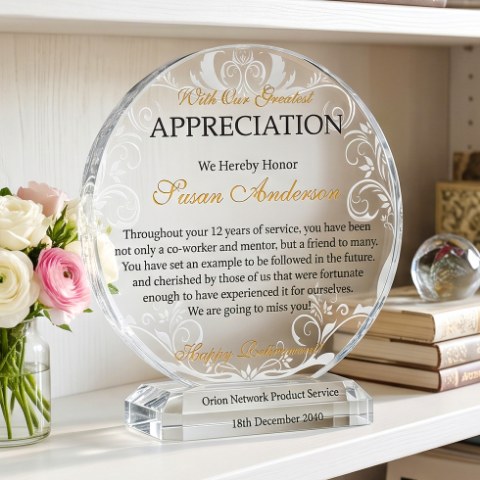

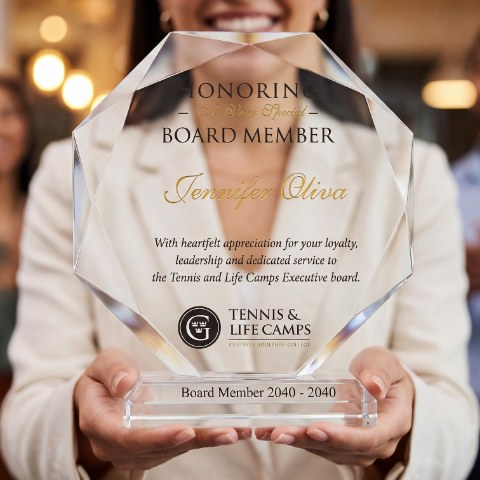
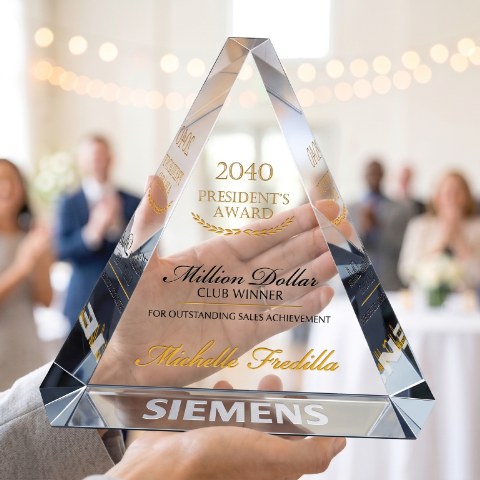

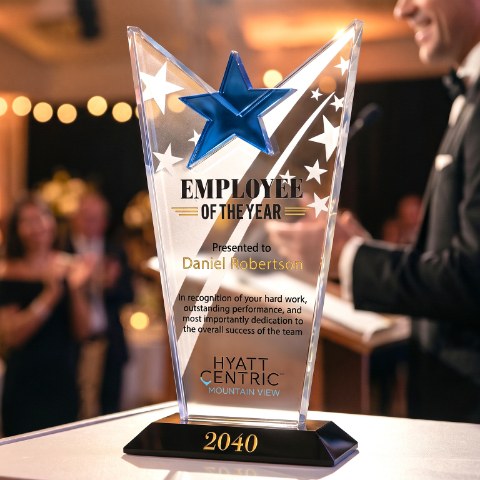
Crystal is particularly appropriate for honors that commemorate an important chapter in someone's career—not simply identify the winner of a competition. It is also an excellent choice for board and organizational leadership recognition.
Personalization is deep etched into the crystal rather than simply printed onto its surface.
Selected etched elements can also receive optional hand-painted color fill when appropriate for the design.
Before production, customers receive a professional artwork proof for review and approval so that the layout and personalization can be checked before the finished award is produced.
Discover lead-free optical crystal awards with deep-etched personalization for retirement, employee recognition, and major career milestones.
Crystal awards are made from optical glass and typically have greater physical weight, polished brilliance and a more substantial presentation. Acrylic awards are made from transparent plastic and are lighter, more impact-resistant and generally less expensive.
Crystal Central uses lead-free optical crystal. The historical association between “crystal” and lead comes largely from traditional lead crystal glassware. Modern optical crystal used for high-quality awards can be manufactured without lead.
A finished solid crystal award is generally substantially heavier than a similarly sized acrylic award. The exact difference depends on the shape, thickness and construction of each award, so actual product weights are more useful than relying on a universal ratio.
Acrylic is generally more impact-resistant and less likely to chip or break if dropped. Crystal requires more careful handling but is well suited to long-term display.
Yes. Company logos, organization emblems, recipient names, dates and messages can be incorporated into a personalized crystal award. Artwork should be reviewed to make sure very fine details will reproduce effectively through the chosen engraving and color-fill process.
Crystal is particularly well suited to retirement because retirement usually represents a major, once-in-a-career milestone. Its substantial weight, presentation and engraving area can complement the significance of the occasion. Acrylic can still be a good choice when budget, shipping weight or design flexibility is more important.
An 8- to 10-inch award is often a useful starting range for retirement recognition, although the ideal size depends on the shape, weight, amount of engraving and desired presentation. A wider or thicker 8-inch award may have more visual presence than a narrow 10-inch design.
This guide was prepared by the Crystal Central team, drawing on our experience with optical crystal awards, deep-etched personalization, product design, and customer recognition needs. Product specifications and examples are based on our actual award collection.


Copyright © 2006-2026 Crystal Central LLC.
All Rights Reserved.